

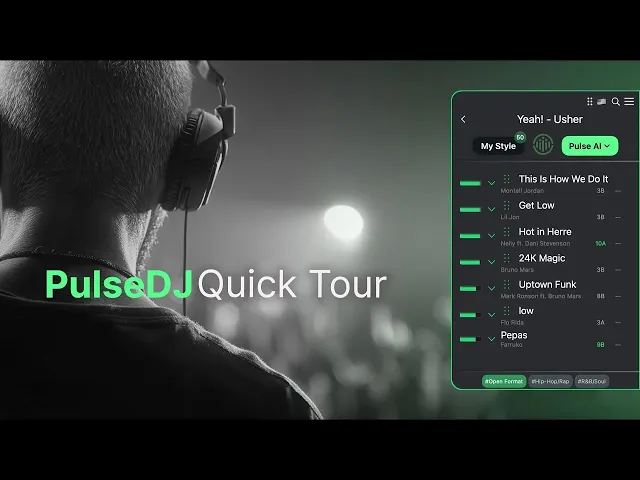
The Future of Crate Digging: How DJs Use AI to Discover Music
As a longtime DJ who has spent years hunting for tracks in dusty record shops and crowded digital pools, I am fascinated by how machine learning is completely rewriting the rules of music discovery.
DJing and AI: What You’ll Learn
How the traditional crate-digging workflow is evolving alongside predictive technology.
The way intelligent data analysis uncovers hidden musical relationships between tracks.
Tips for balancing automated recommendations with your personal taste and human instinct.
How to use PulseDJ to seamlessly integrate intelligent, real-time track suggestions into your mixing setup.
The Evolution of the Dig: From Vinyl Crates to Predictive Playlists
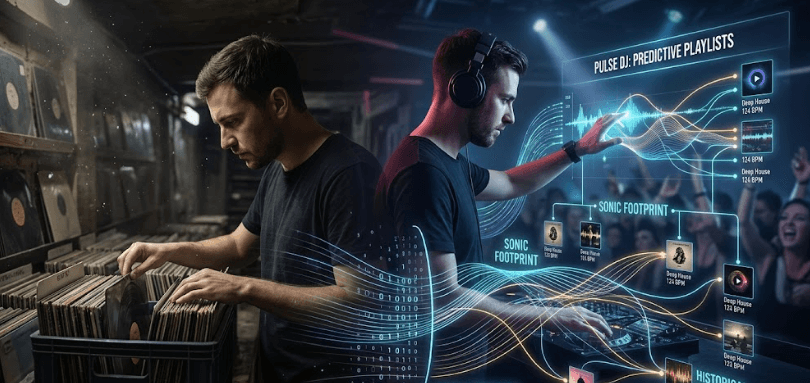
For generations of DJs, digging was defined by physical endurance and patience. We spent hours flipping through vinyl sleeves in damp basements, listening to hundreds of white labels just to find that one elusive B-side that would blow the roof off a venue. When digital audio arrived, the crates transformed into gigabytes of MP3s and endless scrolling through online record stores and promo pools. While accessibility skyrocketed, a new challenge emerged: the sheer volume of music became overwhelming.
Enter machine learning. This technology isn't about replacing the human element of DJing; it is about supercharging our ability to find connections within massive musical ecosystems. Traditional software relies on rigid metadata tags like genre, release year, or a static BPM. Modern intelligent systems, however, analyze vast webs of actual performance data to understand how songs interact in the real world. They look at what tracks are frequently paired together, how crowds react, and how energy levels shift across millions of real-world playlists.
The Problem with Rigid Metadata
Standard search filters in DJ software are incredibly binary. If you search for a Deep House track at 124 BPM in the key of 8A, your software will only return tracks that explicitly match those exact parameters. This algorithmic rigidity misses the magic of DJing-those unexpected, genre-bending transitions that define a memorable set. A tech-house weapon or a classic disco edit might fit the energy perfectly, but a standard database search will never show it to you.
By shifting toward machine learning models, software can identify tracks that share a similar sonic footprint, emotional resonance, or historical transition pattern, even if their metadata tags look completely different on paper.
Introducing PulseDJ: The Future of DJing
If you want to experience the practical application of machine learning in your workflow today, PulseDJ.com is the perfect example of how this technology can enhance your performance. Designed to run as a lightweight companion application alongside your existing DJ setup, PulseDJ acts as a real-time AI co-pilot while you mix.
The beauty of PulseDJ.com lies in its architecture. It doesn't replace or alter your primary performance environment; instead, it offers official, seamless compatibility with major platforms like Serato DJ Pro, Rekordbox, Virtual DJ, Traktor, and djay PRO.

The app processes data from millions of analyzed parties and playlists to instantly suggest creative next tracks while you are live in the mix. It does this through two distinct, powerful systems:
In-Set Suggestions: PulseDJ analyzes the last three tracks you’ve played to dynamically recommend what should come next, adapting on the fly to the tempo, key, and energy shifts of your current set.
MyStyle Personalized Suggestions: The platform securely tracks your personal playing history across devices, continuously learning your unique taste to deliver highly customized recommendations that improve the more you use the software.
You can download PulseDJ for free today.
How Intelligent Algorithms Understand the Groove
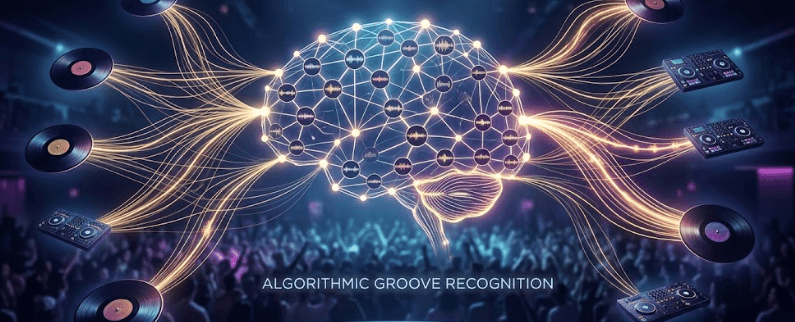
To understand why this shift is so revolutionary, we need to look under the hood at how data pattern recognition works for music selection. Instead of just reading text tags, advanced systems observe behavioral data across the global DJ community. They process anonymous, aggregated information from countless hours of dancefloor mixing to identify hidden relationships between songs.
Imagine a web where every single track is a node, and every time a DJ transitions from one track to another, a new thread is drawn between them. Over time, as thousands of DJs mix around the world, certain threads grow thicker and stronger. Machine learning algorithms analyze these pathways to understand context, energy progression, and stylistic compatibility.
Analyzing the Synergy of the Mix
Discovery Metric | Traditional Digital Digging | Machine Learning Assisted Digging |
Search Basis | Strict text queries, rigid genre tags, and explicit BPM boundaries. | Behavioral patterns, community performance data, and real-time set context. |
Time Investment | Hours spent sorting through charts, blogs, and bloated promo pools. | Instantaneous shortlists generated dynamically based on active mixing behavior. |
Genre Versatility | High risk of staying in a single genre silo due to manual filtering limits. | Seamless cross-genre suggestions linked by authentic track compatibility. |
Contextual Awareness | Static; the software has no idea what you played five minutes ago. | Dynamic; adapts recommendations based on the immediate direction of the room. |
Human Instinct vs. Artificial Intelligence: Finding the Sweet Spot

One of the most common anxieties I hear from fellow selectors is the fear that technology will homogenize DJ sets. If everyone uses algorithms to find music, won't we all end up playing the exact same tracks?
The short answer is no. Not if you treat technology as a co-pilot rather than an autopilot. The true art of DJing lies in curation, timing, and reading the room. An algorithm can suggest a track that is mathematically or historically compatible, but it doesn't know the exact emotional temperature of your dancefloor at 2:00 AM. It doesn't know that the lighting guy just dropped the strobes, or that a group of birthday party guests just walked up to the front row.
Tips for Maintaining Your Sonic Identity
Use Suggestions as a Springboard: Treat automated recommendations as a quick-reference list of options rather than a mandatory sequence.
Inject Intentionally Personal Tracks: Break up algorithmic flows by throwing in wildcards-tracks you found entirely by manual digging or personal nostalgia.
Train Your Tools: The best systems adapt to your individual habits. Feed your software your unique playlist histories so it learns your specific mixing style over time.
Harness AI DJing Techniques with PulseDJ
The future of music discovery isn't about letting a computer mix for you; it's about eliminating the friction of finding the perfect record when the pressure is on.
By adopting machine learning workflows, you can free up valuable mental bandwidth during your sets, shifting your focus away from frantic library searching and toward creative transitions, crowd engagement, and performance expression.
Start making AI work for you as a DJ today, Download PulseDJ for free!
